Skip to content
SmartDEPOT Partner Network

SmartDEPOT™ for city bus manufacturers

A smartbus is an ordinary bus with SmartDEPOT™ fitted in the factory. It drives itself inside the depot, at low speed, with no safety driver: parking, charging approach, washing, repositioning. A Smartbus Coordinator at the operator supervises through SmartDEPOT™ Mission Control. For manufacturers, SmartDEPOT™ is a factory option on the city bus you already build.


Driver time returned to line service

Across assessed depots, manual depot movement takes 10 to over 35 minutes per vehicle per day. At MZA Warsaw it is about 35 minutes a day for each bus, measured in MZA's assessment of its own depot. Every depot move the smartbus makes returns that time to line service.

No major infrastructure changes

The intelligence rides on the bus. A depot needs a data connection to SmartDEPOT™ Mission Control and a link to its depot management system.

The bus sees 360°

Multi-LiDAR 3D sensing gives 360° perception around the bus, by day and at night. If anything is unclear, the bus stops.

Three choices we made

We left bus building to European manufacturers, who already make and service the city buses operators run every day.

We stayed off public roads for now. A bus with a safety driver is not autonomous — it is simply a more expensive bus. On public roads the safety driver will stay for years. Inside the depot, a city bus can work with no safety driver today: the bus drives empty, at low speed, on a known layout.

We kept the sensors on the bus, because sensors fixed in the depot can lose sight of people between parked buses.

The category argument in full: why European manufacturers are best placed to define the smartbus (Sustainable Bus, October 2026).

What operators are asking for

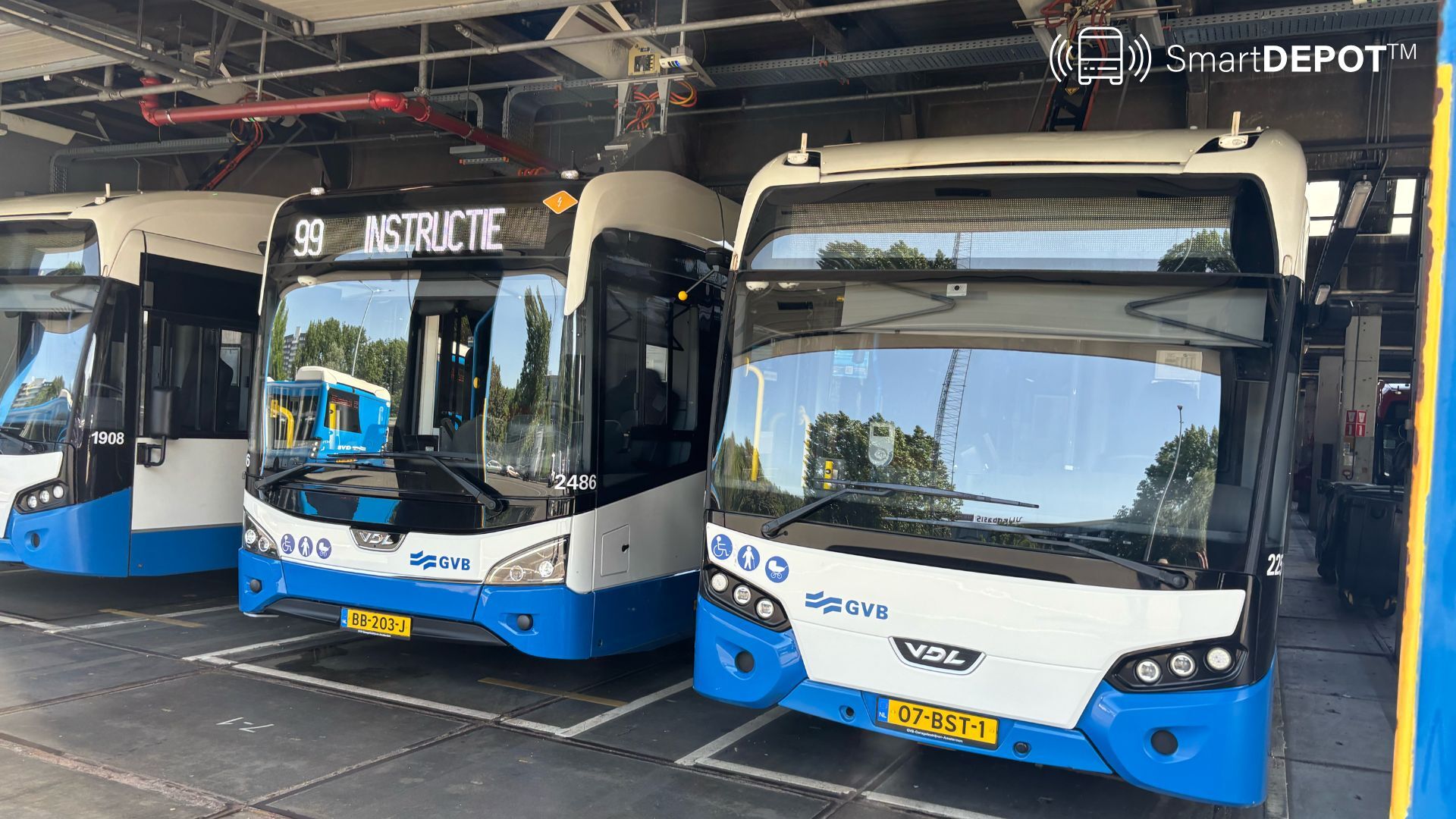
Autonomous Systems has carried out depot assessments with operators in Belgium, Spain, the Netherlands, Norway, Poland and Switzerland, among them GVB's Garage West in Amsterdam. Each assessment is a site survey and data exercise in the operator's own depot: the movements suited to automation, the driver minutes they take and the low-speed damage they cause.

MZA Warsaw published an early tender for depot autonomous vehicles. No manufacturer submitted a bid. MZA's Redutowa depot, the first depot in Europe being designed for smartbus operations, is planned for 140 autonomous-ready buses on two levels, with no conventional parking slots, and a control centre where the Smartbus Coordinator oversees all vehicle movements from a screen.

The value of the driver time, in MZA's case: over €88,000 per vehicle over a 12-year lifecycle, at 35 minutes a day. The figure counts driver time only. It leaves out the system cost and the drive-by-wire vehicle premium, which no manufacturer has quoted yet. Contract operators count over their own contract term.

Behind the demand: about 105,000 unfilled bus and coach driver positions in Europe, about 10% of the workforce, and more than 275,000 by 2028 without action to attract and retain drivers (IRU, Driver Shortage Report 2023).

What the vehicle needs

SmartDEPOT™ needs drive-by-wire control of steering, braking and propulsion. Depot and road autonomy share that foundation: drive-by-wire, clear interfaces between vehicle and autonomy stack, and fail-safe behaviour that is tested, monitored and repeatable, as The State of Smart Depots 2026 sets out.

The SmartDEPOT™ autonomous driving system adds multi-LiDAR perception and the depot driving functions: parking, the charging approach, washing, repositioning. When the bus leaves the depot, the autonomous mode switches off.

On public roads a vehicle needs type-approval under Regulation (EU) 2018/858 and the General Safety Regulation (EU) 2019/2144, with the driving system approved under Implementing Regulation (EU) 2022/1426. ISO 22737 covers low-speed automated driving. Which approval route covers driverless operation inside the depot is one of the first questions we settle with each manufacturer.

Roles. The manufacturer builds the bus, fits SmartDEPOT™ on the production line, keeps vehicle approval in its own hands and sells the smartbus as a factory option. Autonomous Systems supplies the SmartDEPOT™ autonomous driving system to the manufacturer and SmartDEPOT™ Mission Control to the operator. Mission Control works with the operator's depot management system: the DMS sends drive orders, vehicle and target position, and receives real-time positions.

Where we are

SmartDEPOT™ is in development. The public pilot runs on a minibus: a joint smartbus pilot with PKM Gliwice, with technical validation inside the PKM Gliwice depot. At our technology park in Gliwice, the BB-1 minibus runs development tests supervised from SmartDEPOT™ Mission Control on site, with no safety driver on board. A full-size smartbus is in development with a European bus manufacturer.

On the operator side, the path is the Smartbus Onboard Program: a depot assessment, a smartbus pilot, then a tender that specifies smartbuses.

See it drive

Development test, 28 October 2026

Vehicle: BB-1 minibus
Site: our technology park in Gliwice
Supervision: SmartDEPOT™ Mission Control, on site
On board: no safety driver

See it explained

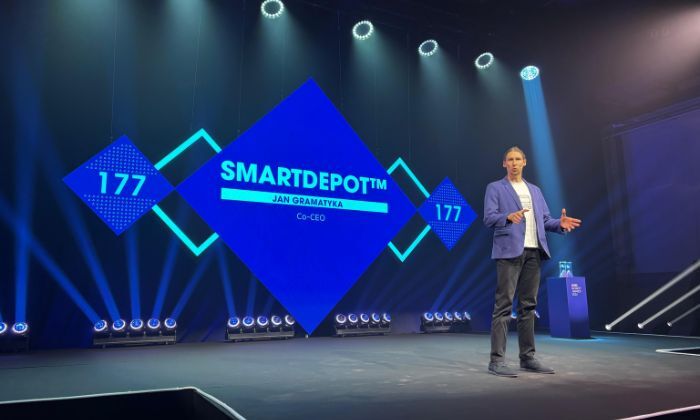
In the SmartDEPOT™ launch video, Jan Gramatyka, co-CEO of Autonomous Systems, explains the depot-first approach: why autonomy starts inside the depot, and how the Smartbus Coordinator supervises the smartbuses from SmartDEPOT™ Mission Control.

Talk to our engineers

Tell us which platform you have in mind and what you want to know: vehicle interfaces, the approval route inside the depot, operator demand in your markets. We will contact you. If you want the numbers first, download The State of Smart Depots 2026.

News


Autonomous Systems at Transexpo 2026

Autonomous Systems at Transexpo 2026

Gliwice, Poland — 29 September 2026

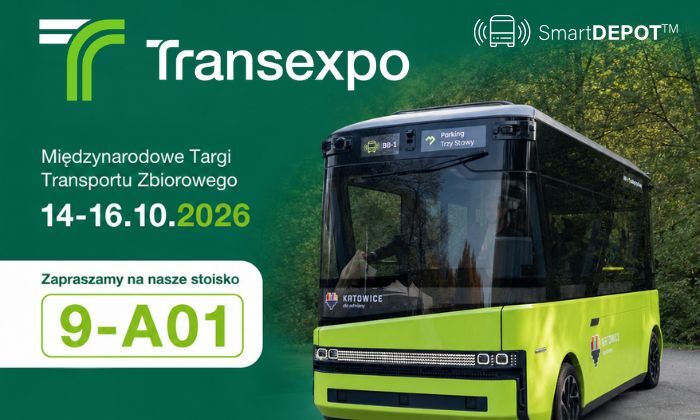
At TRANSEXPO in Kielce, Poland (14–16 October, hall 9, stand 9-A01), Autonomous Systems will present the Polish edition of its report "The State of Smart Depots 2026". According to the report, depot manoeuvres take on average 25 to 35 minutes per bus per day: driver time that can go back into passenger service as the driver shortage grows.

MUBIL Mobility Awards 2026

SmartDEPOT™ one of 6 finalists at the MUBIL Mobility Awards 2026

Gliwice, Poland — 23 October 2026

Jan Gramatyka’s 3-minute pitch at the MUBIL Mobility Awards 2026 in Donostia: why bus autonomy starts in the depot, and what 35 minutes a day for every bus means for an operator. Watch the video.

PKM Gliwice - Smartbus Pilot

Smartbus Pilot at PKM Gliwice

Gliwice, Poland – 5 December 2025

Autonomous Systems, a technology company founded and operating in Gliwice, has launched the Smartbus Pilot together with PKM Gliwice at the city’s depot. The project brings together local engineering expertise and the experience of a municipal public transport operator, advancing a new category of smartbuses – standard city buses equipped with autonomous driving functions for depot operations.

Giving time back to drivers

Giving time back to drivers

Protect reliability by giving time back to drivers — starting with low-speed depot moves that consume capacity every day. Watch the video to see smartbus – the driver’s friend in the depot. 

The ROI of smartbuses

The ROI of smartbuses

Autonomy in public transport is often discussed as a future end-state. Here’s the practical view: what happens to costs and capacity when you automate the repetitive, non-revenue movements inside the depot. It starts with a simple ROI equation, breaks down the real cost buckets (per bus vs per depot), and shows why fleet scale changes unit economics - a straightforward way to turn “interesting” into “measurable.”

Depot autonomy

Revolution Evolution in bus autonomy

Autonomous buses won’t arrive via a single leap. This article explains why depot-first autonomy is the practical on-ramp: start in a controlled environment, learn safely in real operations, and build step-by-step readiness for street autonomy without disrupting service.