

Skip to content

Depot-First Autonomy: Smartbus Pilot at MZA Warsaw

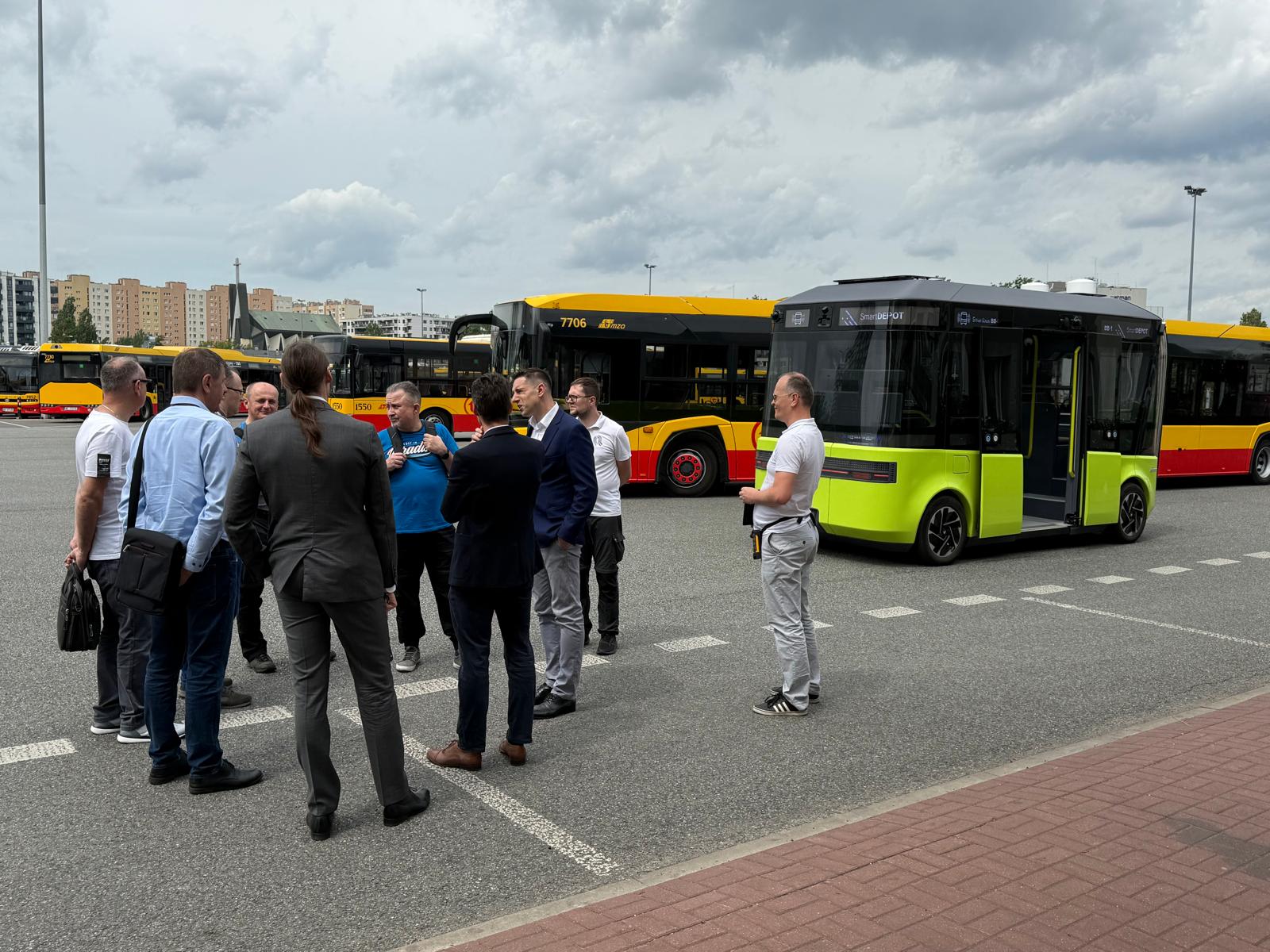
Smartbus in Ostrobramska Depot

Industry

Public Transport Operator

Challenge

Urban bus operators are under mounting pressure to maximize operational efficiency, enhance depot throughput, and reduce safety risks during low-speed maneuvers, all without compromising driver satisfaction or ROI. Traditional depot operations in dense urban environments are marked by bottlenecks, frequent minor collisions, and driver fatigue from complex end-of-shift vehicle movements. MZA Warsaw, as a leader in public transport innovation, sought a proven, low-risk path to automation that would address these pain points, support driver retention, and position the organization for future-ready infrastructure like the Redutowa depot.

Results

The Smartbus Pilot at MZA Warsaw’s Ostrobramska depot demonstrated that depot-first autonomy can deliver tangible operational benefits: estimated daily time savings of 35 minutes per bus, a reduction of 3–4 low-speed collisions per week, and lifecycle cost reduction of €88,000 per vehicle over 12 years. These results validated SmartDEPOT™ as a practical, lower-risk pathway to smart depot operations, aligning with MZA’s strategy for scalable, safe, and future-proof urban transport.

Solution

Smartbus Pilot, SmartDEPOT™

35min
Driver-time recovered per day
€88K
Cost Savings per bus
18%
ROI with 10 smartbuses

Autonomy doesn’t replace humans – it genuinely supports them. It allows us to relieve drivers from time-consuming and complex maneuvers at the end of their shifts, which reduces the risk of minor collisions and lowers stress and fatigue. This, in turn, translates into a higher level of safety and comfort for our staff.

Jan Kuzminski

President of MZA Warsaw

100 lat transportu publicznego z Teamem

About MZA Warsaw

MZA Warsaw is Poland’s largest bus operator, responsible for more than 75% of all bus services in the capital. Every day, its fleet of over 1,400 vehicles operates several hundred urban and suburban routes, providing Warsaw residents with reliable, modern public transport.

MZA not only invests in zero-emission mobility, but also consistently implements technological innovations — such as the SmartDEPOT™ system — that improve operational efficiency and safety, while enhancing comfort for both passengers and employees.

The Challenge

MZA Warsaw, one of Poland’s largest urban transport operators, faced growing demands to improve depot efficiency, enhance safety, reduce operational costs, and support driver wellbeing. Tight depot spaces led to bottlenecks and frequent minor collisions, with drivers experiencing stress and fatigue from complex end-of-shift maneuvers. The need to modernize infrastructure — without introducing undue risk or cost — meant finding a solution that could immediately address depot workflow pain points and position MZA for its next-generation Redutowa facility.

The Solution

Evaluating the options for automation, MZA Warsaw identified depot-only autonomy as the optimal entry point — minimizing risk while maximizing operational benefit. The operator piloted SmartDEPOT™, which transforms a standard city bus into a smartbus capable of autonomous low-speed movement, precise parking, and workflow integration across charging, washing, and staging areas. This approach allowed drivers to focus on route operations and passenger service, rather than stressful internal maneuvers. As Jan Kuźmiński, President of MZA Warsaw, explained: “We are designing Redutowa so that in an emergency there will be no need to evacuate people – only vehicles. But safety is not just about fire scenarios – it is also about everyday working conditions. A driver finishing a shift should not have to worry about stressful maneuvers in a cramped hall. We want them to be able to rest immediately, while all the maneuvers are carried out automatically.”

The Results

After testing SmartDEPOT™, MZA Warsaw recognised the potential for significant improvements: an estimated 35 minutes saved per bus per day in end-of-shift manoeuvring, 3–4 fewer minor collisions per week, and labour cost savings of approximately €88,000 per vehicle over a 12-year lifecycle. Together, these changes reduce operational complexity, improve driver wellbeing, and lay the foundation for a scalable, future-ready smart depot model.

As Jan Kuźmiński noted: “Ostrobramska made one thing clear: every minute and every maneuver matters. That’s why at Redutowa, we want to implement technologies that cut queues, eliminate collisions, and deliver real savings – every single day. We’re building the depot of the future – the first to truly open the path toward autonomous urban transport. It’s already happening. The only question is: who will join the shift, and who will be left behind?”

Interested in smartbuses and SmartDEPOT™?
